KASHMIR

Valleys, Houseboats, Snow & Timeless Beauty

KASHMIR

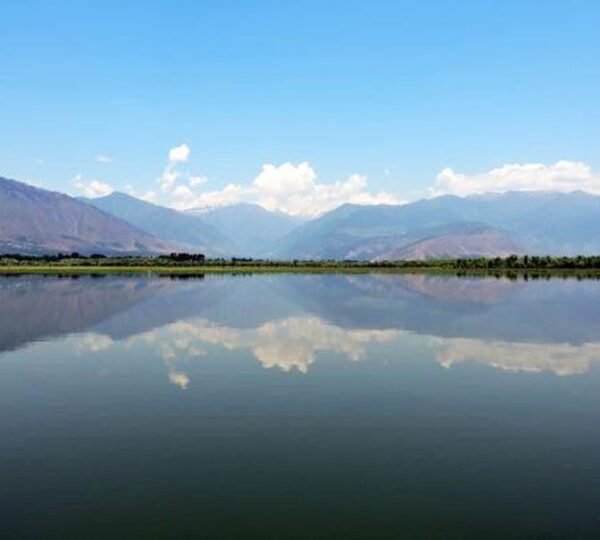
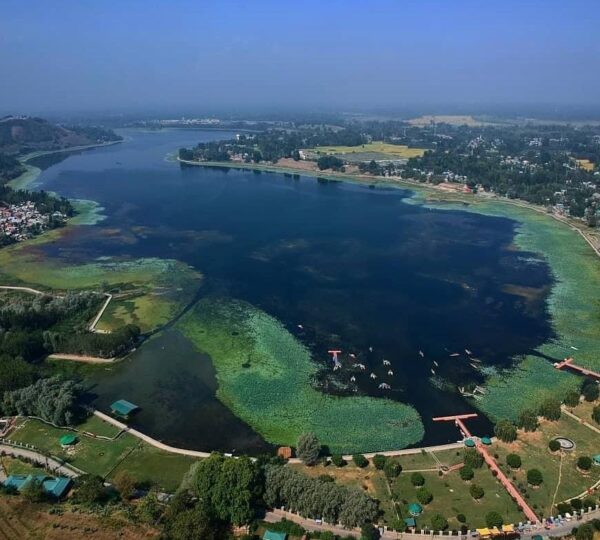
Kashmir, often called "Paradise on Earth," is the northernmost region of the union territory of Jammu & Kashmir, separated from the Jammu region by the Pir Panjal mountain range and accessible via the Jawahar Tunnel or the new Banihal Qazigund Road. Unlike the subtropical Jammu region, the Kashmir Valley is a high-altitude alpine bowl (average elevation ~1,850 meters) dominated by the Jhelum River, Dal Lake, and a ring of snow-capped Himalayan peaks including Nanga Parbat and Kolahoi Peak. The valley is famous for its Mughal gardens, houseboats, dry fruits (saffron, walnuts, almonds), and traditional crafts like Pashmina shawls and Kashmiri carpets. The climate features cool summers, heavy snowfall in winter, and vibrant autumn colors. Culturally, Kashmir has a distinct identity shaped by Persian influences, Sufi traditions, Kashmiri language, and a unique cuisine (Rogan Josh, Yakhni, Wazwan). The region is also home to several major pilgrimage sites (Amarnath Cave, Hazratbal Shrine) and has been the focal point of both historical trade routes and modern geopolitical significance. While tourism has faced challenges due to security situations, the valley remains one of India's most breathtaking and culturally rich destinations.
Popular Destinations

Srinagar

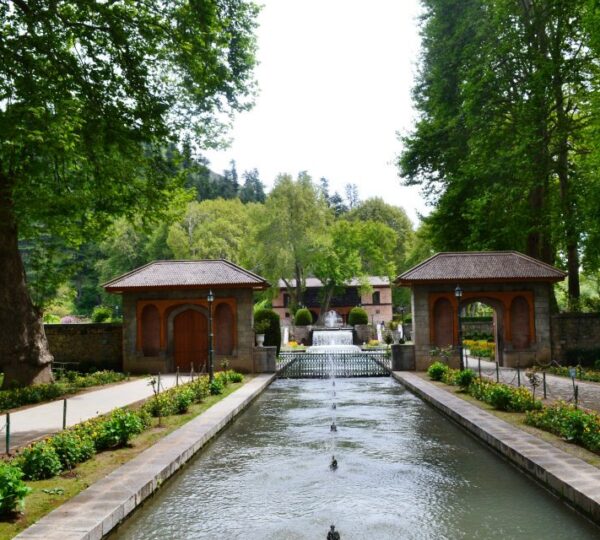
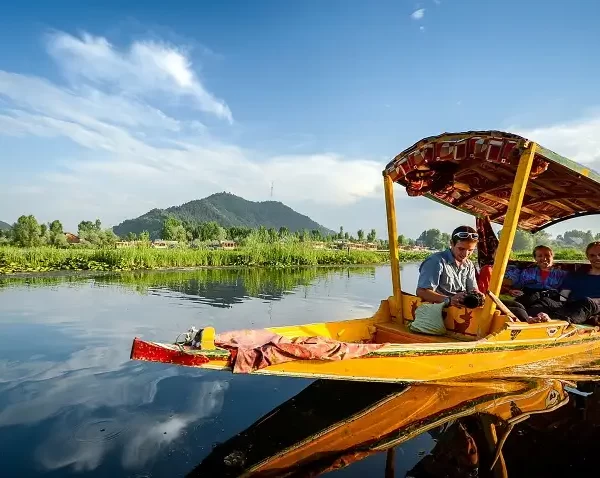
Srinagar is the summer capital of Jammu & Kashmir, situated along the banks of the Jhelum River. It is world-famous for Dal Lake, its intricate network of houseboats, shikaras (wooden boats), and the floating vegetable market. The city is also home to magnificent Mughal gardens, including Shalimar Bagh and Nishat Bagh, as well as historic mosques like the Jamia Masjid and the Hazratbal Shrine.

Gulmarg

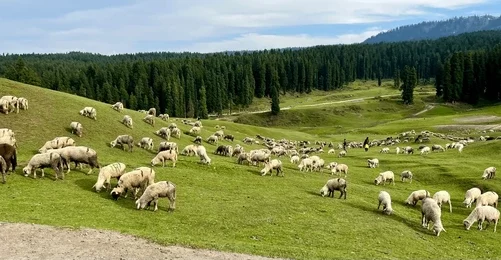
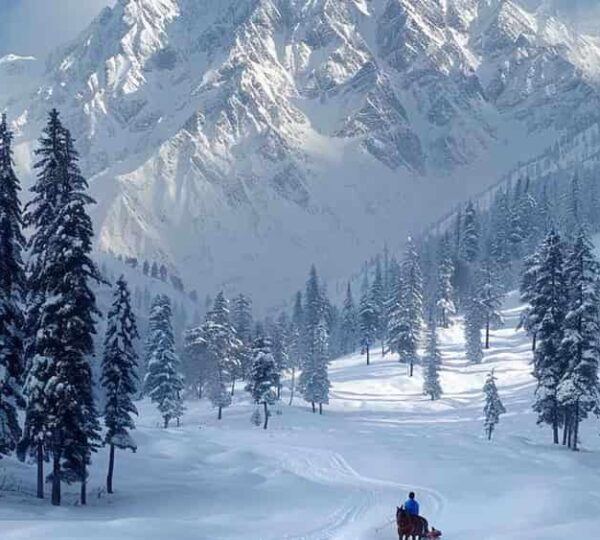
Gulmarg, meaning “Meadow of Flowers,” is a premier hill station and ski resort located in the Pir Panjal range. It is renowned for having one of the world’s highest gondola cable cars, which reaches elevations of nearly 4,000 meters. In winter, it becomes a hub for snow sports, and in summer, it offers lush green meadows and panoramic views of Nanga Parbat.

Pahalgam

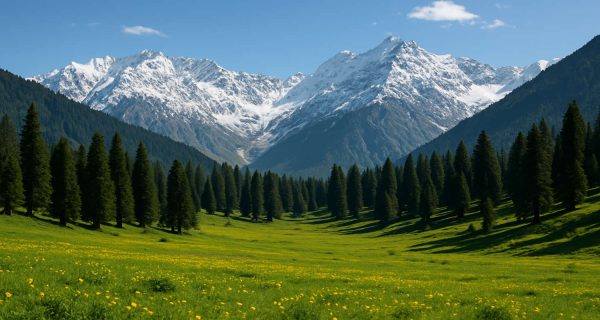
Pahalgam is a scenic town situated at the confluence of the Lidder and Sheshnag rivers. It serves as the base camp for the annual Amarnath Yatra pilgrimage. The area is known for its pine-covered hills, Betaab Valley, Aru Valley, and the meadow of Baisaran, often called “Mini Switzerland” for its stunning landscape.

Sonamarg

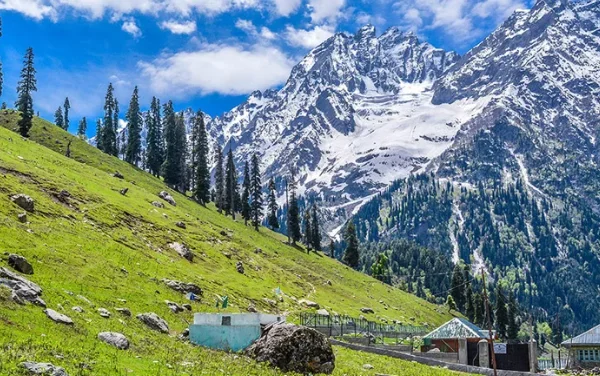
Sonamarg, meaning “Meadow of Gold,” lies at an altitude of about 2,800 meters in the Kashmir Valley. It is a hill station known for the Thajiwas Glacier, which remains snow-covered even in summer. Sonamarg is also the starting point for the Zoji La pass, which leads to Ladakh, making it a strategic and scenic stop along the route.

Aharbal Waterfall

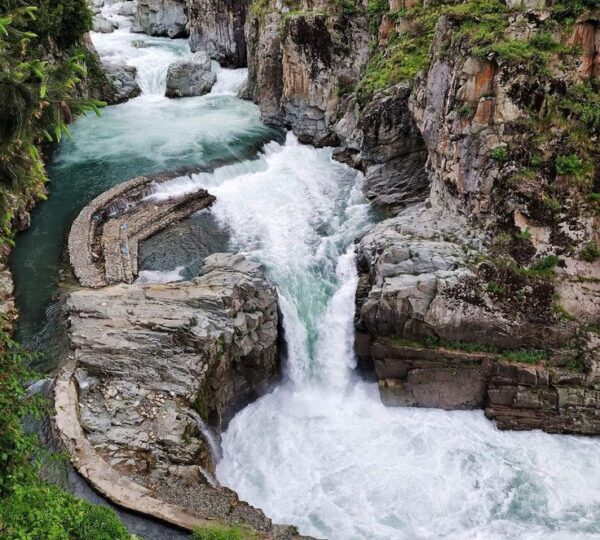
Known as the “Niagara Falls of Kashmir” ; located in Kulgam district, 70-75 km from Srinagar at an altitude of 2,266 m; features a 25-metre waterfall where the Veshaw River crashes through a narrow 7-metre-wide rocky gorge; serves as the base camp for the Kounsarnag Lake trek offers trout fishing with permit from Fisheries Department; accessible year-round

Kokernag

Situated in Anantnag district, approximately 70 km from Srinagar at an altitude of 2,000 m . The name derives from “Koker” (fowl) and “Nag” (serpent), as the seven springs spread out like a fowl’s claws . Known as Papashudan Nad (“sin-cleansing spring”) with waters believed to cure digestive and skin ailments . Features the Kokernag Botanical Garden (15 acres) with manicured lawns, flower orchards

Verinag

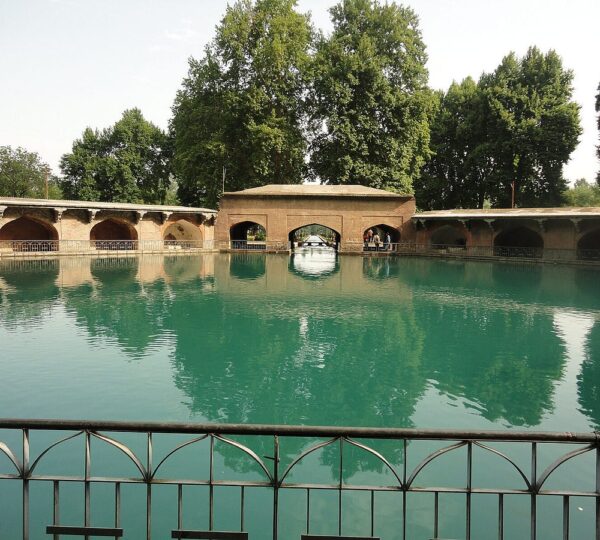
Located in Anantnag district, approximately 78 km from Srinagar at an altitude of 1,876 m . Features a perennial spring that is the primary source of the Jhelum River (known as Veth locally) . The spring forms an octagonal stone basin (130 ft in diameter), built by Mughal Emperor Jahangir in 1620 AD . 

Achbal

Located in Anantnag district, approximately 58-69 km southeast of Srinagar, 8-9 km from Anantnag town . Features a powerful natural spring gushing out of the Sonsanwar Hill at the foot of the Himalayan mountains . The spring is believed to be the reappearance of the Brengi Nallah (Bringhi River) , which disappears into limestone fissures at nearby Dewalgam village

Doodhpathri

Located in Budgam district, approximately 42 km from Srinagar at an altitude of 2,730 m (8,960 ft) in the Pir Panjal Range . Named “Valley of Milk” because the Shaliganga River flowing through the meadows has a milky-white appearance from a distance . Legend says Sufi saint Sheikh-ul-Alam (Nund Rishi) struck the ground with his stick, and milk emerged; when he said it couldn’t be used for ablution, it turned to water 

Yousmarg

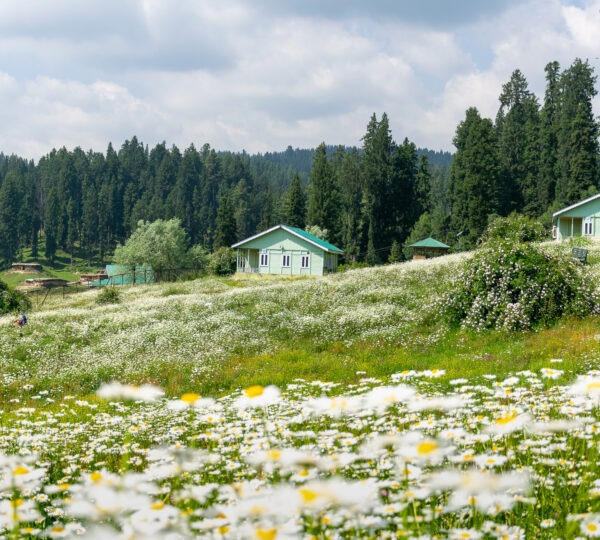
Located in Budgam district, approximately 47-55 km from Srinagar at an elevation of 2,396 m (7,861 ft) in the Pir Panjal range . Known as the “Meadow of Jesus” — Yus refers to Jesus and marg means meadow, based on local belief that Jesus passed through or stayed here while traveling in Kashmir . Features expansive lush green meadows carpeted with wildflowers (daisies, buttercups) surrounded by dense pine, fir, and deodar forests

Wular Lake

Largest freshwater lake in India and one of the largest in Asia, situated in Bandipora district, approximately 40-60 km north of Srinagar, at the foothills of Haramukh Mountain at an elevation of 1,580 m . The lake basin was formed by tectonic activity; its size varies dramatically with seasons—from 30 sq km to 189 sq km (some sources even mention up to 260 sq km) 

Manasbal Lake

Located in Ganderbal district, approximately 30 km north of Srinagar near Safapora village, at an elevation of 1,583 m (5,194 ft) . Often called the “Supreme Gem of All Kashmir Lakes” . Holds the distinction of being the deepest freshwater lake in the Kashmir Valley, with a maximum depth of 13 m (45 ft) and average depth of 4.5 m (15 ft) . Surface area is approximately 2.81 km², with a maximum length of 5 km and width of 1 km

Ready to explore Kashmir

Get The Best Deals & Offers